
BROWSE PRODUCTS BY MATERIAL
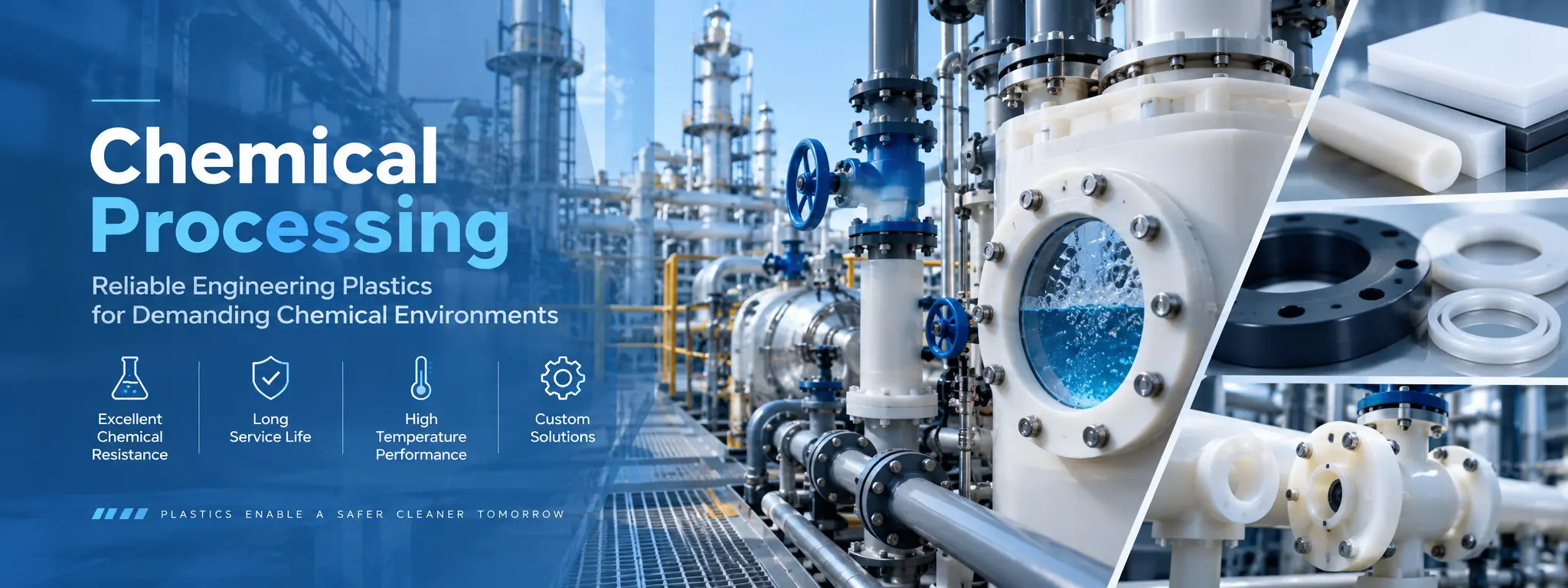

MATERIALS FOR CORROSIVE ENVIRONMENTS
Performance Begins with Chemical Compatibility.
Chemical processing components may face acids, alkalis, solvents, cleaning agents, elevated temperatures, pressure and repeated mechanical movement.
Engineering plastics can provide corrosion resistance, lower weight, electrical insulation and useful wear properties in selected pumps, valves, fluid-handling assemblies and processing equipment.
ZERO supplies semi-finished rods and sheets for CNC machining. Compatibility must be checked against the exact chemical, concentration, temperature, stress and exposure time.
CHEMICAL PROCESSING REQUIREMENTS
Properties That Guide Material Selection.
No single plastic resists every chemical under every condition. Evaluate the complete process environment.
Chemical Compatibility
Match the polymer and grade to the exact media, concentration and exposure conditions.
Temperature Capability
Account for continuous temperature, cleaning cycles and combined chemical-temperature effects.
Mechanical Strength
Support pressure, clamping, structural loads and repeated operating cycles.
Wear & Friction
Consider sliding surfaces, shafts, valve movement and abrasive process media.
Low Moisture Uptake
Support dimensional control in wet, humid or continuously immersed environments.
Precision Machinability
Produce sealing features, flow paths and controlled dimensions from stock shapes.
TYPICAL COMPONENTS
Machined Parts for Fluid and Process Equipment.
These examples illustrate possible uses. Final material and component design must be validated for the specific process.
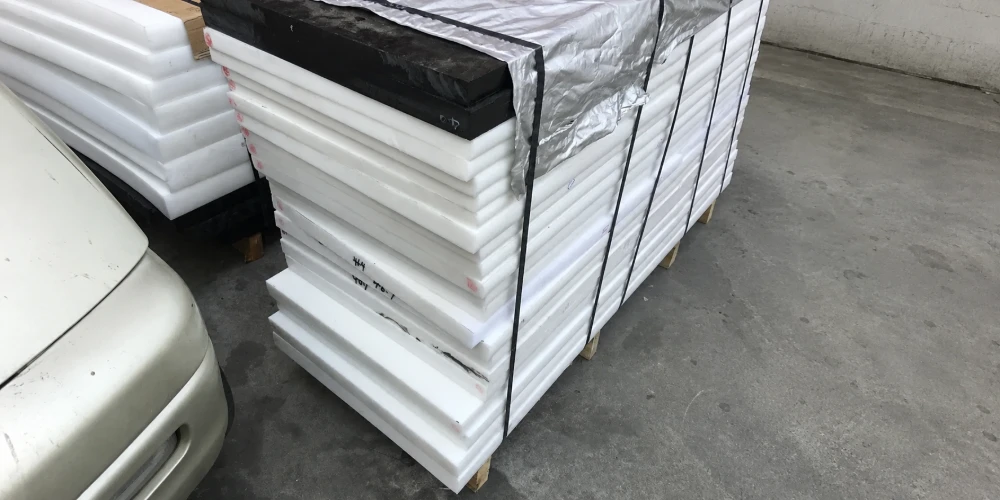
01 / PUMPS
Pump Components
Selected wear rings, sleeves, guides and structural parts for fluid equipment.
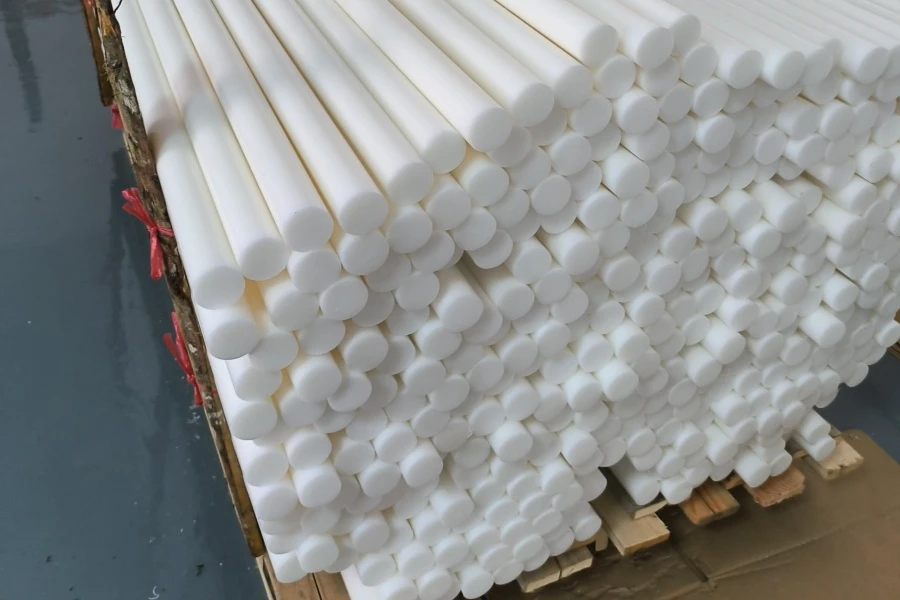
02 / VALVES
Valve Seats & Components
Machined seats, guides and internal parts for selected chemical service.
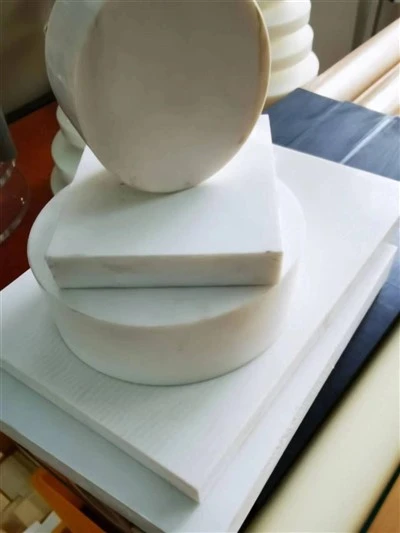
03 / SEALING
Seals, Rings & Gaskets
Machined sealing profiles where chemical, thermal and wear conditions permit.
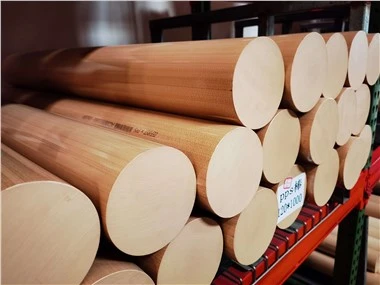
04 / MOTION
Bushings & Bearings
Low-friction supports for shafts and moving process-equipment assemblies.
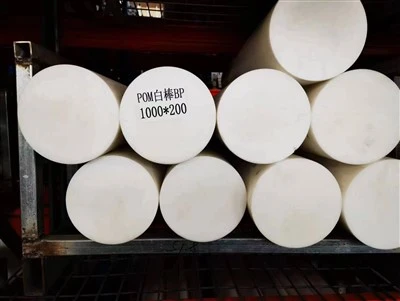
05 / FLOW
Manifolds & Flow Blocks
Machined channels and distribution components from suitable sheet or block stock.
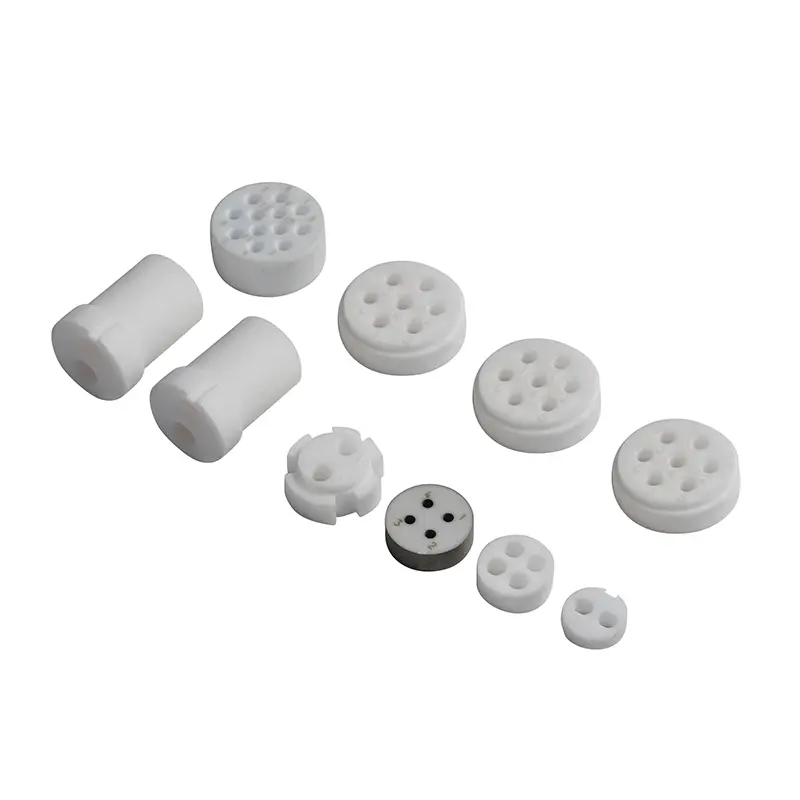
06 / EQUIPMENT
Structural & Insulating Parts
Supports, spacers, guides and plates within chemical-processing equipment.
CHEMICAL PROCESSING FAQ
Before Selecting a Chemical-Resistant Plastic.
These answers provide general guidance. Final compatibility must be verified for the exact grade and process.
Which engineering plastic has the best chemical resistance?
There is no universally best material. PVDF, PEEK and PPS are common starting points for demanding chemical environments, but compatibility depends on the exact chemical, concentration, temperature and stress.
Can a chemical resistance chart guarantee suitability?
No. Charts are screening tools. Real performance can change with temperature, pressure, mixtures, residual stress, duration and part geometry. Application testing may be required.
When should PVDF be considered?
PVDF may be considered for selected corrosive-fluid and high-purity systems where its chemical resistance, weatherability and low moisture absorption match the process requirements.
When are PEEK or PPS more suitable starting points?
They may be evaluated where chemical resistance must be combined with higher temperature capability, stiffness or mechanical performance.
What information is needed for a chemical-processing inquiry?
Please provide the chemical or mixture, concentration, temperature, pressure, exposure time, mechanical load, component drawing, required stock dimensions, quantity and applicable standards.