
BROWSE PRODUCTS BY MATERIAL
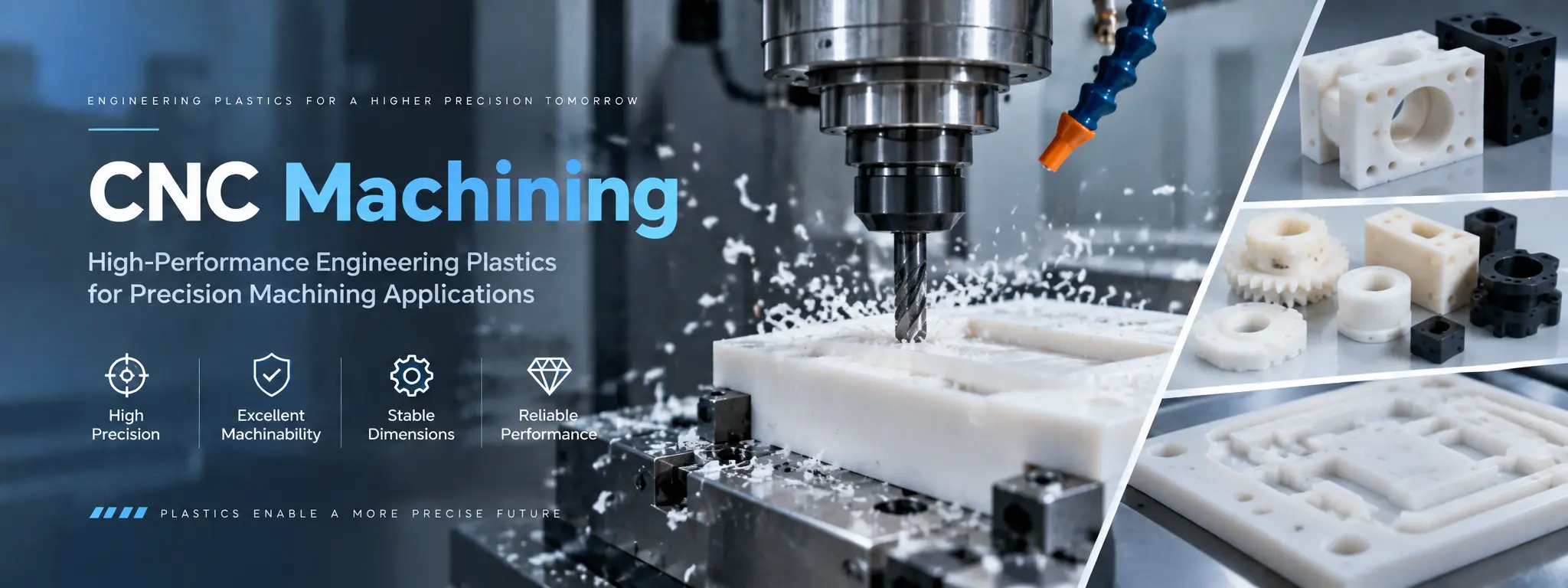
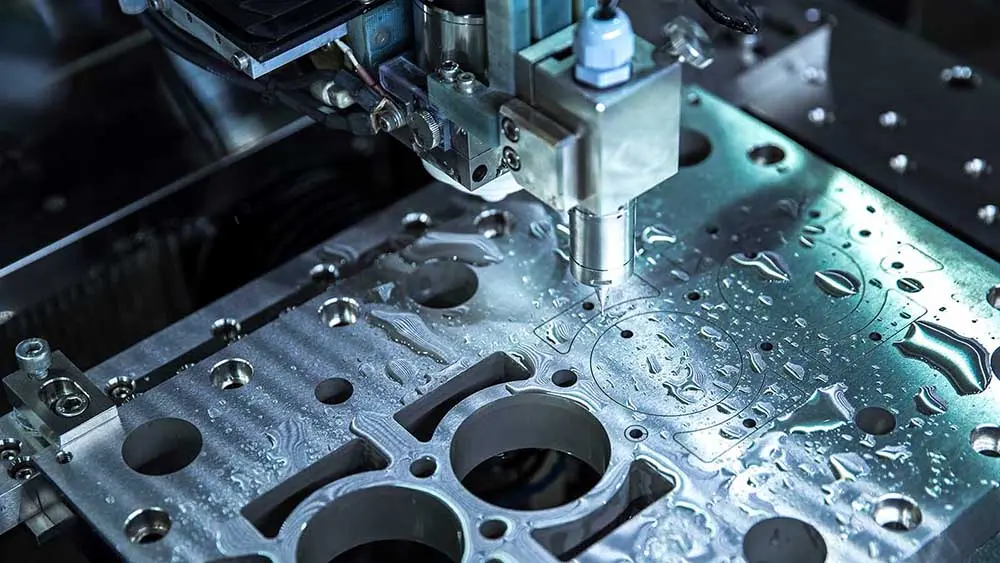
FROM STOCK SHAPE TO FINISHED COMPONENT
Machinable Materials for Accurate Industrial Parts.
Engineering plastics respond differently from metals during CNC machining. Their lower stiffness, thermal expansion, heat sensitivity and internal stress require suitable workholding, sharp tools and controlled cutting conditions.
Well-selected semi-finished stock supports prototypes, complex geometries, replacement parts and repeatable production while offering corrosion resistance, insulation, low friction or reduced weight.
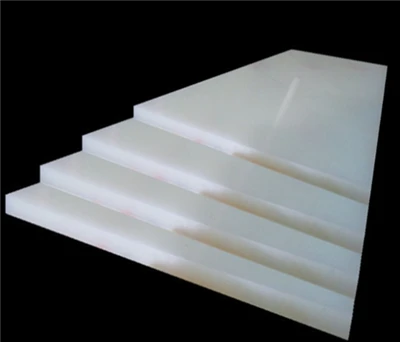
ZERO supplies rods and sheets for further machining. Final tolerance and surface quality depend on material family, grade, stock dimensions, part geometry, machining sequence and service environment.
CNC MACHINING PRIORITIES
Control the Material, Process and Part Geometry.
Good results begin with realistic tolerances and machining practices matched to the selected polymer.
Stock Stability
Select suitable stock condition, size and machining allowance for the component.
Heat Management
Limit local heating that can soften material, change dimensions or affect surface quality.
Sharp Cutting Tools
Use appropriate tool geometry, edge condition, feeds and speeds for the polymer.
Controlled Workholding
Support the workpiece without distortion, excessive clamping force or vibration.
Stress Management
Plan roughing, intermediate conditioning where needed, and balanced finishing passes.
Conditioned Inspection
Measure parts at a defined temperature and after adequate dimensional stabilization.
TYPICAL CNC COMPONENTS
From Simple Turned Parts to Complex Milled Geometry.
Engineering plastic stock shapes support both one-off replacement parts and repeatable production machining.
01 / TURNING
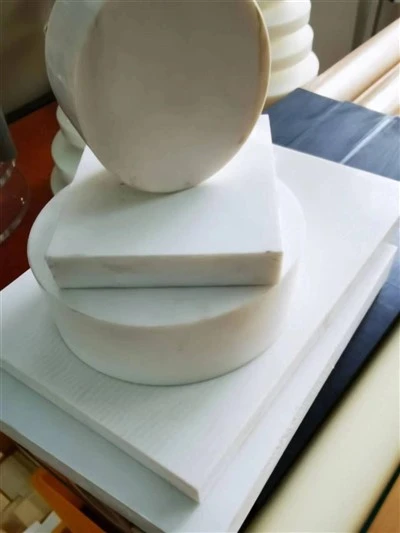
Bushings & Sleeves
Turned components with controlled bores, shoulders and running clearances.
02 / DRIVE
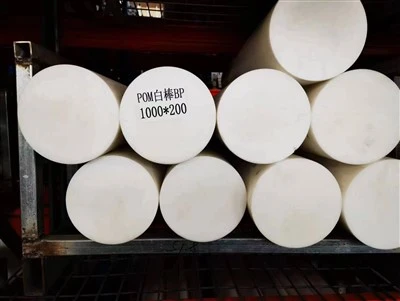
Gears & Sprockets
Machined profiles for selected loads, speeds and noise requirements.
03 / FLOW
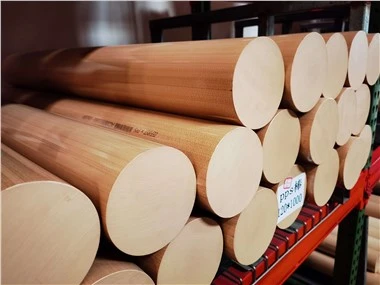
Manifolds & Valve Parts
Complex channels and sealing features for compatible fluids and pressures.
04 / ELECTRICAL
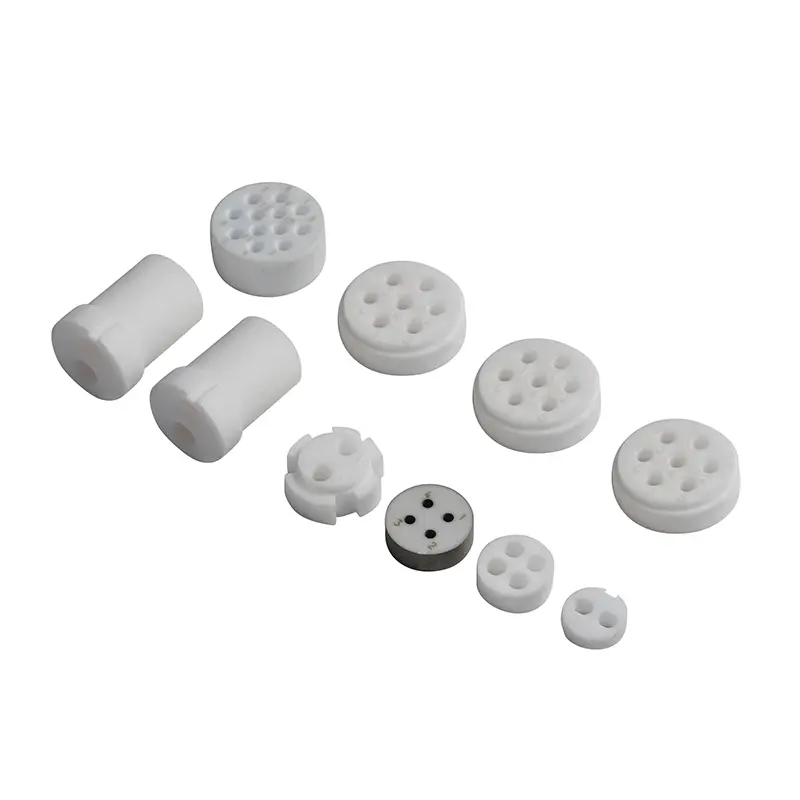
Insulators & Supports
Accurate isolation parts, terminal supports and structural spacers.
05 / MOTION
Guides & Wear Plates
Milled sliding surfaces, rails and wear components for machinery.
06 / TOOLING
Fixtures & Inspection Nests
Lightweight tooling for positioning, assembly and repeatable inspection.
CNC MACHINING FAQ
Before Machining Engineering Plastics.
Machining recommendations must be adjusted for the exact material, machine, tool and part geometry.
Can engineering plastics be machined to metal-like tolerances?
Some features can be held closely, but thermal expansion, moisture response, stiffness and stress relaxation differ from metals. Specify tolerances according to function and define the inspection temperature and conditioning.
Why are sharp tools important when machining plastics?
Sharp tools reduce cutting force and heat generation. Dull edges can rub, melt, tear or distort the workpiece and may produce poor surface quality.
When should intermediate annealing be considered?
It may be considered for large material removal, thick sections, highly asymmetric geometry or especially tight dimensional requirements. The need and cycle depend on the exact material and stock condition.
Should coolant be used for plastic machining?
Cooling or chip removal may help, but the fluid must be compatible with the polymer and the finished application. Air, mist or suitable liquid methods are selected according to process and material.
What information is needed for a CNC machining material inquiry?
Please provide the drawing, application, operating environment, material preference, critical tolerances, surface requirements, stock dimensions, quantity and any required documentation.